prepare for dissertation proposal

 Can not sleep and so see Hotel Rwanda instead! That is a bad decision, since I can not lying down after that movie. The post-producition documentary called Message for Peace, in which the director, screenwriter and the realworld Paul reconstructed their experience in making that movie. The unforgetable moment is about when the Western gave up the land and the humanity starts to conquer the fear in ordinary people.
The film is a story of "Ten years ago some of the worst atrocities in the history of mankind took place in the country of Rwanda--and in an era of high-speed communication and round the clock news, the events went almost unnoticed by the rest of the world. In only three months, one million people were brutally murdered. In the face of these unspeakable actions, inspired by his love for his family, an ordinary man summons extraordinary courage to save the lives of over a thousand helpless refugees, by granting them shelter in the hotel he manages."
This morning I wake up and listen to NPR and it reports recent conflict in Congo and other Africa regions. I remember one conversation in the film. The British reporter told Paul that even if the western world see the video clips of the masacar, "people will say, God this is terrible, and then go for their dinner". That is exactly what happend in 1994 and what is happening today. The Hotel Rwanda is a miracle and people saved are most social elite from minority groups. They know how to use diplomatic power to save themselves in the mass and they are the only few who survived. In the end of the interview with Paul, he summarized why the western and the UN did not intervene in 1992. He said America and other western countries were afraid to repeat their failure in Somalia shortly before 1994. Also Rwanda is a small country without resources, the only thing they produce are "coffee and tea".
Can not sleep and so see Hotel Rwanda instead! That is a bad decision, since I can not lying down after that movie. The post-producition documentary called Message for Peace, in which the director, screenwriter and the realworld Paul reconstructed their experience in making that movie. The unforgetable moment is about when the Western gave up the land and the humanity starts to conquer the fear in ordinary people.
The film is a story of "Ten years ago some of the worst atrocities in the history of mankind took place in the country of Rwanda--and in an era of high-speed communication and round the clock news, the events went almost unnoticed by the rest of the world. In only three months, one million people were brutally murdered. In the face of these unspeakable actions, inspired by his love for his family, an ordinary man summons extraordinary courage to save the lives of over a thousand helpless refugees, by granting them shelter in the hotel he manages."
This morning I wake up and listen to NPR and it reports recent conflict in Congo and other Africa regions. I remember one conversation in the film. The British reporter told Paul that even if the western world see the video clips of the masacar, "people will say, God this is terrible, and then go for their dinner". That is exactly what happend in 1994 and what is happening today. The Hotel Rwanda is a miracle and people saved are most social elite from minority groups. They know how to use diplomatic power to save themselves in the mass and they are the only few who survived. In the end of the interview with Paul, he summarized why the western and the UN did not intervene in 1992. He said America and other western countries were afraid to repeat their failure in Somalia shortly before 1994. Also Rwanda is a small country without resources, the only thing they produce are "coffee and tea".
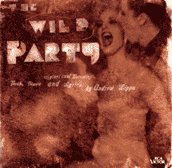 Went to CU's new production Wild Party yesterday with friends. It is produced by CU Musical Theatre Society, an incredibely young crew with tremendous energy and charm! Most of the performers are freshmen or sophomore and the live jazz band is fantastic. Considering the time and money limit they face, this version of the ex-Broadway show is really a decent try-on.
The storyline is very simple. "Adapted from a book-length poem written in and about the Roaring Twenties, Andrew Lippa's WILD PARTY tells the story of one wild evening in the Manhattan apartment shared by Queenie and Burrs, a vaudeville dancer and a vaudeville clown. In a relationship marked by vicious behavior and recklessness (mirroring the time in which they live), they decide to throw a party to end all parties. "
A recent production was around July 2005 and the critics reviewed it as follows "On top of all this, "The Wild Party" conveys a sense of the decadent side of New York of the 1920s better than anything I can recall since F. Scott Fitzgerald's The Great Gatsby. Lippa's score deserved more attention and admiration when his show debuted at the Manhattan Theatre Club in 2000, and this production's formidably gifted cast captures the youthful, hedonistic, self-destructive pulse of the Jazz Age -- its dangerous, crash-and-burn, live-for-the-moment fervor-- with riveting intensity."
What a coincidence! I just finish the Great Gatsby and encounter the Wild Party right away. I miss the sensitional time in history with endless possibilities and a deep sense of lost of the past world.
Ennis could not bear the dress of the performers and he quit the show after 15 mins. The rest of us enjoy it very much. Both Ennis and Otsman are Turkish, Yan and I are Chinese. There was lots of fun in the afterward dinner. I felt much comfortable to spare time with them than the previous night, when we dined out with two Chinese documentary film makers after the show. The turkish language is very interesting and it shares same grammatic structure as Japaness. Hope I could go to Istanbul as Yan did last summer some day. She and Ennis spend two weeks in Xi'an and then went to Turkey for another two weeks.
Went to CU's new production Wild Party yesterday with friends. It is produced by CU Musical Theatre Society, an incredibely young crew with tremendous energy and charm! Most of the performers are freshmen or sophomore and the live jazz band is fantastic. Considering the time and money limit they face, this version of the ex-Broadway show is really a decent try-on.
The storyline is very simple. "Adapted from a book-length poem written in and about the Roaring Twenties, Andrew Lippa's WILD PARTY tells the story of one wild evening in the Manhattan apartment shared by Queenie and Burrs, a vaudeville dancer and a vaudeville clown. In a relationship marked by vicious behavior and recklessness (mirroring the time in which they live), they decide to throw a party to end all parties. "
A recent production was around July 2005 and the critics reviewed it as follows "On top of all this, "The Wild Party" conveys a sense of the decadent side of New York of the 1920s better than anything I can recall since F. Scott Fitzgerald's The Great Gatsby. Lippa's score deserved more attention and admiration when his show debuted at the Manhattan Theatre Club in 2000, and this production's formidably gifted cast captures the youthful, hedonistic, self-destructive pulse of the Jazz Age -- its dangerous, crash-and-burn, live-for-the-moment fervor-- with riveting intensity."
What a coincidence! I just finish the Great Gatsby and encounter the Wild Party right away. I miss the sensitional time in history with endless possibilities and a deep sense of lost of the past world.
Ennis could not bear the dress of the performers and he quit the show after 15 mins. The rest of us enjoy it very much. Both Ennis and Otsman are Turkish, Yan and I are Chinese. There was lots of fun in the afterward dinner. I felt much comfortable to spare time with them than the previous night, when we dined out with two Chinese documentary film makers after the show. The turkish language is very interesting and it shares same grammatic structure as Japaness. Hope I could go to Istanbul as Yan did last summer some day. She and Ennis spend two weeks in Xi'an and then went to Turkey for another two weeks.
 Initially, I don't like the title of this sequence of Chinese documentary. It sounds too Japanese. Well, it turns out to be some interesting movies, reflecting various classes in nowedays China. Today we saw Hu Xinyu's "Shit Man" and Huang Weikai's "Floating". The first one is kind of hardcore. It portraits a lifestyle without hope, a couple of self-centered men living in a dirty industrial city Taiyuan. The whole movie is very heavy and presses the audience to the ground. People suffer because of their own choices made and they blame everything except themselves. This is not a film about depressed sex desire although it throws a lot of dirty jokes and conversations about it; it rather focuses on the aimless life and self-constructed man ego under the risk of burnout.
The Floating is a lot more articulate and smooth. The street singer's life run through us and the small struggles of this 30 years old man are familiar to most of us, ambition, love and survive. The good thing about it is its quality of shooting, even though the director is not fully aware of them. In the Q&A section, many audiences give credits to the documentary's beautiful shots, but the director seems kind of confused.
I don't know much about the history of chinese documentary film and so I can not make judgement about the quality and significance of the three films showed here. Nevertheless, it is good to know some people are working on these facinating projects, about the changing society and its people, about a nation with endless potential, and about unintended consequences of gloabalization in our land.
Initially, I don't like the title of this sequence of Chinese documentary. It sounds too Japanese. Well, it turns out to be some interesting movies, reflecting various classes in nowedays China. Today we saw Hu Xinyu's "Shit Man" and Huang Weikai's "Floating". The first one is kind of hardcore. It portraits a lifestyle without hope, a couple of self-centered men living in a dirty industrial city Taiyuan. The whole movie is very heavy and presses the audience to the ground. People suffer because of their own choices made and they blame everything except themselves. This is not a film about depressed sex desire although it throws a lot of dirty jokes and conversations about it; it rather focuses on the aimless life and self-constructed man ego under the risk of burnout.
The Floating is a lot more articulate and smooth. The street singer's life run through us and the small struggles of this 30 years old man are familiar to most of us, ambition, love and survive. The good thing about it is its quality of shooting, even though the director is not fully aware of them. In the Q&A section, many audiences give credits to the documentary's beautiful shots, but the director seems kind of confused.
I don't know much about the history of chinese documentary film and so I can not make judgement about the quality and significance of the three films showed here. Nevertheless, it is good to know some people are working on these facinating projects, about the changing society and its people, about a nation with endless potential, and about unintended consequences of gloabalization in our land.
 拆北京:记忆与遗忘
赵旭东(Xu-Dong Zhao)
“北京正经历着一种巨变,这巨变可以在一个非常流行的象征符号“拆”上得到具体的体现与表达。“拆”是一种媒介,由此某些背景中的被遗忘的事情可以被唤醒而进入到记忆或者前景之中,其服从于一种“逆遗忘恢复”的原则。“非此非彼”以及“处于中间”而非“对立”可以看作是传统性与现代性之间关系的一个核心特征。表面上,通过“拆”,某种东西要被拆毁而其他东西要被记忆。从更深层的意义上来讲,这也是在中国文化背景下的一种再界定的过程,或者也可以说成是统治与服从之间的一种循环的游戏。“
“拆北京:记忆与遗忘 “拆”是一个道地的本土语汇,但是后来的发展,特别是近代中国的现代化过程也使其承载了许多的现代意义。在某种意义上,中国的现代史可以被看成是一个“拆”的历史。上世纪初,中国人的命运跟一系列的事件紧密地联系在一起,这些事件隐含有的一种共同特征,那就是“拆”。“新”与“旧”之间的自然差异被转化成为一种伦理价值上的等级差异,这种等级差异又被运用到社会领域中拆迁行为的合法性之上。“拆”的潜在逻辑意味着新的东西一经出现,旧的东西应该被拆除或者瓦解。在此背景下,“拆”指涉一种“取代”,一种“进步”。 ——赵旭东(载《社会科学》2006年1期)”
拆北京:记忆与遗忘
赵旭东(Xu-Dong Zhao)
“北京正经历着一种巨变,这巨变可以在一个非常流行的象征符号“拆”上得到具体的体现与表达。“拆”是一种媒介,由此某些背景中的被遗忘的事情可以被唤醒而进入到记忆或者前景之中,其服从于一种“逆遗忘恢复”的原则。“非此非彼”以及“处于中间”而非“对立”可以看作是传统性与现代性之间关系的一个核心特征。表面上,通过“拆”,某种东西要被拆毁而其他东西要被记忆。从更深层的意义上来讲,这也是在中国文化背景下的一种再界定的过程,或者也可以说成是统治与服从之间的一种循环的游戏。“
“拆北京:记忆与遗忘 “拆”是一个道地的本土语汇,但是后来的发展,特别是近代中国的现代化过程也使其承载了许多的现代意义。在某种意义上,中国的现代史可以被看成是一个“拆”的历史。上世纪初,中国人的命运跟一系列的事件紧密地联系在一起,这些事件隐含有的一种共同特征,那就是“拆”。“新”与“旧”之间的自然差异被转化成为一种伦理价值上的等级差异,这种等级差异又被运用到社会领域中拆迁行为的合法性之上。“拆”的潜在逻辑意味着新的东西一经出现,旧的东西应该被拆除或者瓦解。在此背景下,“拆”指涉一种“取代”,一种“进步”。 ——赵旭东(载《社会科学》2006年1期)”
 This is not a Chinese copy of "Before the Rain"! The documentary is about a city which was going to be flooded in 2003, about people's mentality at that turbulent moment of histoy.
"Fengjie is a 1,000-year-old city on the Yangtze River, a bustling centre of commerce and a community of considerable social vitality. It's also about to become a new Atlantis, thanks to the Chinese government's mammoth Three Gorges Dam project, which will flood the entire region.This superb, gripping documentary follows the fate of its inhabitants, as they scramble, literally and figuratively, for higher ground - specifically, the residences in 'New Fengjie', allocated via lottery and far smaller than the homes they've worked a lifetime to build. "
I feel its structure is rather loose and the directors were not able to make the political struggle between civil society and the powerful governmnet as its major story line. Instead, the film took an outsider's objective position and tried to have a balanced view. The story is really about ruthlesss exploration of citizen's housing wealth, the only property of most city dwellers in that poor town of Sichuan. However, the film is so mild that you can hardly see what the story is about. Anyway, it is impressive to see how a town was torn down before our very eyes, with its residents became a crowd without identity. They were cut from their history, their traditional way of living (loss of argiculture field or small private inn or the church), and their connection with each other. The demolition is a symbol of the destruction of traditional Chinese society. I can not help thinking the big “拆”in Beijing and in many other cities. Nobody pay attention to the lost history which were maintained in the architectures, in the buildings, in the old communities and in the rather powerless ordinary people.
I should make a documentary of Beijing and its demolation before it is too late. Lao Zhu once told the story of his effort to persuaded Beijing Municipal government to follow German's example, to precisely measured old buildings and communities before they were torn down. No body listened and the history was destroyed by the greed desire for moderalizaton. Fengjie disappears from our map and Beijing is not. However I feel more sad about Beijing. She likes a old lady and is forced to make plastic surgeries all the time. She is ugly by both old and new standards. what can I do to save her? I miss her layback life style, her elegency, her narrow street and endless blue sky in the mid Fall.
This is not a Chinese copy of "Before the Rain"! The documentary is about a city which was going to be flooded in 2003, about people's mentality at that turbulent moment of histoy.
"Fengjie is a 1,000-year-old city on the Yangtze River, a bustling centre of commerce and a community of considerable social vitality. It's also about to become a new Atlantis, thanks to the Chinese government's mammoth Three Gorges Dam project, which will flood the entire region.This superb, gripping documentary follows the fate of its inhabitants, as they scramble, literally and figuratively, for higher ground - specifically, the residences in 'New Fengjie', allocated via lottery and far smaller than the homes they've worked a lifetime to build. "
I feel its structure is rather loose and the directors were not able to make the political struggle between civil society and the powerful governmnet as its major story line. Instead, the film took an outsider's objective position and tried to have a balanced view. The story is really about ruthlesss exploration of citizen's housing wealth, the only property of most city dwellers in that poor town of Sichuan. However, the film is so mild that you can hardly see what the story is about. Anyway, it is impressive to see how a town was torn down before our very eyes, with its residents became a crowd without identity. They were cut from their history, their traditional way of living (loss of argiculture field or small private inn or the church), and their connection with each other. The demolition is a symbol of the destruction of traditional Chinese society. I can not help thinking the big “拆”in Beijing and in many other cities. Nobody pay attention to the lost history which were maintained in the architectures, in the buildings, in the old communities and in the rather powerless ordinary people.
I should make a documentary of Beijing and its demolation before it is too late. Lao Zhu once told the story of his effort to persuaded Beijing Municipal government to follow German's example, to precisely measured old buildings and communities before they were torn down. No body listened and the history was destroyed by the greed desire for moderalizaton. Fengjie disappears from our map and Beijing is not. However I feel more sad about Beijing. She likes a old lady and is forced to make plastic surgeries all the time. She is ugly by both old and new standards. what can I do to save her? I miss her layback life style, her elegency, her narrow street and endless blue sky in the mid Fall.