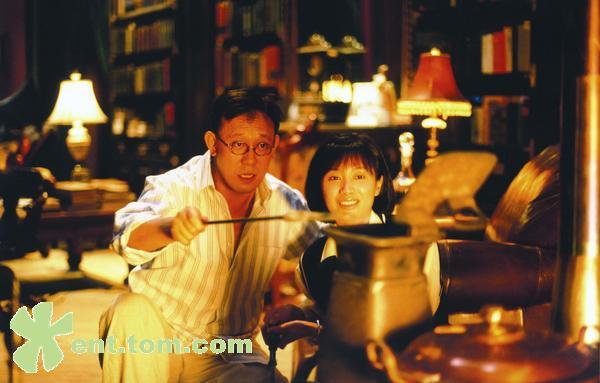
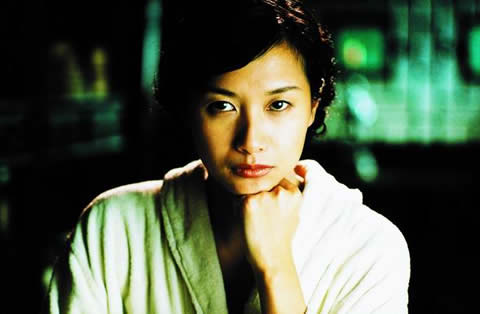
I watched Xu JingLei's "Letter from an Unknown Woman" a second time and was surprised by its focus on details and a nice vibration of music throughout the movie. It is a re-adaptation of a 1948
Max Ophüls film, based a screenplay be
Howard Koch and featured by
Joan Fontaine as Lisa Berndle and
Louis Jourdan as the charming Stefan Brandit in Vienna. Ophuels is a European director and so that is why the film was so much not Hollywood style. It was claimed by Library of Congress as a film with "culturally significance". There are something interesting about the director Max Ophuels and the author Stephen Zweig. Both of them are Jew. According to Wikipedia:
"Predicting the dread of the
Nazi ascendancy, Max Ophuels, a
Jew, fled to
France in 1933 after the Reichstag fire and became a French citizen in 1938. After the fall of France to Germany, he traveled through
Switzerland and
Italy to the
USA in 1941, only to become inactive in Hollywood. Fortunately, he was rescued by longtime-fan
Preston Sturges and went on to realized a number of distinguished films. He returned to Europe in 1950. Though he died from rheumatic heart disease in Hamburg, Ophuls was buried in
Le Père Lachaise Cemetery in Paris. He had made just over twenty films. " "Being a Jew, Zweig fled Austria in 1934, following Hitler's rise to power. He was famously defended by the composer
Richard Strauss who refused to remove Zweig's name (as
librettist) from the posters for the premiere, in
Dresden, of his opera
Die schweigsame Frau (The Silent Woman). This led to
Hitler refusing to come to the premiere as planned; the opera was banned after three performances. Zweig then lived in England (in
Bath and
London), before moving to the United States. In 1941 he went to Brazil, where he and his second wife Lotte (née Charlotte Elisabeth Altmann) committed suicide together in
Petrópolis using the barbiturate
Veronal, despairing at the future of Europe and its culture. "I think it better to conclude in good time and in erect bearing a life in which intellectual labour meant the purest joy and personal freedom the highest good on earth," he wrote. His autobiography
The World of Yesterday is a
paean to the
European culture he considered lost." Because of the cultural background and the timing of the film, the original adaptation is more of a nostalgia love song to the disappearing pre-war European culture, rather than a sentimental drama. For Ophuels and Zweig, the fate of the unknown woman was a symbol of the journey of intellectuals in the old Continent. With their deep and obsessive love for the culture of the past, these intellectuals became aliens of their own countries. The metaphor of the novel was masterly captured in the film, a black and white classic of all times.
The Chinese adaptation is a little bit weird. Set in the turbulence of war and revolution of 1930s and 1940s in Peking, the film tells a story of love and betray in a sweet manner. The obsessive love of the young girl for the older dandy seems more rational given the traditional ethics for Chinese womanhood. The film pays the least possible attention to the external environment, and mentions the wars only to make the love of the heroin more purely and her self-sacrificing behavior more adorable. However, it is at most a better version of Zhang AiLeng’s “Qing Cheng Zhi Lian”. The film is beautifully made, like delicate glassware reflecting the glamorous moment of Peking in late 1940s. But it lacks the pain of losing a culture of the past, and the history was only used to decorate the sitting room of the unknown woman. Maybe Lin YuTang did a better job in the “A Moment in Peking”, but there is no good film adaptation yet.
I have loved Zweig and his work for so many years. I guess he was one of the first group of authors I begin to read systematically in middle school. From his well known short stories, which were favorite picks of Chinese translation, to his longer works such as Three Masters, the Right to Heresy, and Letters from Unknown Woman, I indulged myself into his world of old-styled Europe with all its glory. I can not help compare him with
Edith Wharton, another writer I like a lot. With her works such as A House of Mirth and Age of Innocence, Wharton became one of the most astute critics of the upper-class pre-WWI society. I guess two of them can be called the social-historian of their times, even though they observed their societies from quite different angles: one as a marginalized writer from classic literature tradition and one as a foreigner to any country. I think Lao She can be called their Chinese counterpart, a cultural critic of his time and an unconditional lover of old fashioned Peking. Unfortunately, except for Edith Wharton, the other two committed suicide in their prime ages. Is this the fate of cultural critics? Or is it the fate of culture itself?