2006年12月16日星期六
实话别跟我说
一顿摸着黑吃的烛光晚餐和一客甜食之后,我们瘫坐在椅子上说实话。实话是没有理想的爱情,现在人人都爱自己多一些,不肯为别人伤了自己的羽毛。虽然是实话,但是让人伤心和难受。我们对于爱情的想象和夏日的余晖一样消逝,剩下的都是伤心的人。如果换了是我,我会怎么做呢?
昨天晚上在网上和舅舅舅妈聊天,他们感叹幸亏投资正确买了现在的房子,否则在北京五环之内的房子没有低于10000元/平米的了。什么?如果我回到中国的大学里工作,每月月薪3000元,那么三个月不吃不喝下来,还买不了一个平方米的住房?我得认真的考虑一下我现在的职业选择了。这实话叫人听了真难受,现在是“报国无房”的年代了!
妈妈现在改用手机了,据说是因为她总是在北京和天津两地之间旅行,用手机方便大家找到她。
周四的网上面试一塌糊涂,连续两个晚上都沉浸在self destructive behavior--在网上看韩剧。知道什么叫没出息了吧。有不知趣的人两次打电话来,先说吃晚饭,被拒绝之后又说不如饭后去喝一杯。我假装没听见电话。比看韩剧更没劲的就是假装谈一次恋爱。不能因为孤独就找个人就伴儿。我不想把自己现在的生活复杂化。这一点我不知道该怎们跟人家说,所以不如装聋作哑了事。
这个学期的瑜伽课结束了。 休倒立着做头顶倒立的示范,顺便炫耀一下他的身材。嘻嘻,要是我到了38岁也能够保持那样年轻的身体,我也愿意和魔鬼谈谈。


2006年12月12日星期二
Russianmania
 (Dmitri Hvorostovsky)
The shining Christmas Tree before the Met Opera always reminded me the old fashined comedy, The Moonstruck. In the end of the movie, Nicolas Cage waited there for Cher to come and join him for an opera night. Everything is incredibly romantic and real! I always get this kind of transformative feelings after a night at Met. I never figure out it is due to the music, the liboretto, the stage, or the audience, or the mixture of all. The opera brings the past to the present, bring the alien country before our very eyes, and most importantly allow us to explore the foreign feelings of love, loyalty, and pain in their full glory. Comparing to the climax of emotional turbulence on the stage, our daily life becomes trivial. You feel you live through the history and the moment of eternity at the ultimate end of the drama. That is I always feel this big vault in my mind after an opera night, in the meantime, I feel grateful because there is no other chance I could have been with Don Carlo at his fateful day, with Madam Butterfly at her exotic garden, or met Rigoletto at crossroad of his love and death.
Don Carlo at Met this season is a masterpiece. According to Wikipedia,
“Don Carlos is a five-act Grand Opera by the Italian composer Giuseppe Verdi with a libretto written in French by Camille du Locle and Joseph Méry, based on the dramatic play Don Carlos, Infant von Spanien ("Don Carlos, Infanta of Spain") by Friedrich Schiller. It received its first performance at the Paris Opéra on 11 March 1867.”
The musicality of the work is so carefully designed and the five major roles are played by top singers. I particularly like the two Russian musicians. Olga Borodina is a Russian diva and Mezzo-soprano, and she plays the tortured mind Eboli in Don Carlo. Three of her arias are so beautiful and in totally different mode. In Act I Scene I, Princess Eboli sings the Veil Song ('Nel giardin del bello') about a Moorish King and an alluring veiled beauty that turned out to be his neglected wife. Olga gives her figure the playfulness and flirtation character and her voice is full of temptation and desire. In Act II Scene I, Don Carlo rejected the love of Eboli, Eboli was so crazy and she committed to take revenge. Olga played the moment of madness so well that her regret in the end of Act III only becomes real because of this. After confessed her secrete passion for Don Carlo and involvement with the King, Eboli resolves to try to save Don Carlo ('O don fatale'). Olga’s voice changes its tune, plain and beautiful. Dmitri Hvorostovsky , as the fateful friend Rodrigo, give another wonderful performance. Also from Russia, Dmitri is a top baritone of our time. According to Wikipedia,
“ Hvorostovsky was born in Krasnoyarsk in Siberia. He studied at the Krasnoyarsk School of Arts under Jekatherina Yofel and made his debut at Krasnoyarsk Opera House, in the role of Monterone in Rigoletto. He went on to win First Prize at both the Russian Glinka Competition in 1987 and the Toulouse Singing Competition in 1988. Hvorostovsky came to international prominence in 1989 when he won the Cardiff BBC Singer of the World competition, beating local favorite Bryn Terfel. His concert recitals began immediately(London debut, 1989; New York 1990). His operatic debut in the West was at the Nice Opera in Queen of Spades (1989). In Italy he debuted at La Fenice as Eugene Onegin, a success that sealed his reputation, and made his American operatic debut with Chicago Lyric Opera (1993) in La Traviata. He has since sung at virtually every major opera house, including the Metropolitan Opera (debut 1995), the Royal Opera House at Covent Garden, the Berlin State Opera, La Scala and the Vienna State Opera.”
Hvorostovsky played Rodrigo, the Marquise de Posa, Don Carlo’s faithful friend and a symbol of liberation movement at the time. In the duet with the King Phillip II at the garden, he described the sufferings of Flanders people under the King’s cruel ruling. Refusing to listen to Rodrigo's pleas for Flanders, he nevertheless places his trust in him, while advising him to beware of the Grand Inquisitor. Here, Dmitri uses his voice to represent a brave soul for his own cause. In Act IV Scene I, Rodrigo decided to sacrifice himself to Grand Inquisitor to save Don Carlo. Dmitri expressed his complex feeling in such a delicate way that you almost feel the clash of his reluctance to die and his sense of duty to friend and his cause. Hvorostovsky will return to Met in Feb in my all-time favorite Eugene Onegin as the title role. My first time to listen to Onegin was back in college in an elective class. Pushkin’s sense of live and death, love and honor, immediately grasped my young soul. It is my first love of opera and the encounter is unforgettable.
I also enjoy the beginning of the Study scene in Act IV, where the aging king complains he never has the love of his queen and his life is close to its end. He demands the power of God to see human’s mind and feels the powerlessness of his current state in the struggle between church and state. He fights two wars at the same time and has no hope to win either of them. The tragic feeling he has about his role as a king and a husband is a huge contrast to his grand performance in ACT III, where he disarmed his son and represses the rebellion from Flanders.
All the figures in Don Carlo fight two wars, their public war and private war. Their fates interact each other at both levels. Verdi put his compassion for liberation of Italy in 1860s into this play in 1560 Spain, and gave each character emotional depth which was not otherwise possible in an epic play like this. Each figure had a chance to present themselves not as a symbol, but as a human being. Eventually it is the human struggle that makes this play earns its everlasting charisma.
(Dmitri Hvorostovsky)
The shining Christmas Tree before the Met Opera always reminded me the old fashined comedy, The Moonstruck. In the end of the movie, Nicolas Cage waited there for Cher to come and join him for an opera night. Everything is incredibly romantic and real! I always get this kind of transformative feelings after a night at Met. I never figure out it is due to the music, the liboretto, the stage, or the audience, or the mixture of all. The opera brings the past to the present, bring the alien country before our very eyes, and most importantly allow us to explore the foreign feelings of love, loyalty, and pain in their full glory. Comparing to the climax of emotional turbulence on the stage, our daily life becomes trivial. You feel you live through the history and the moment of eternity at the ultimate end of the drama. That is I always feel this big vault in my mind after an opera night, in the meantime, I feel grateful because there is no other chance I could have been with Don Carlo at his fateful day, with Madam Butterfly at her exotic garden, or met Rigoletto at crossroad of his love and death.
Don Carlo at Met this season is a masterpiece. According to Wikipedia,
“Don Carlos is a five-act Grand Opera by the Italian composer Giuseppe Verdi with a libretto written in French by Camille du Locle and Joseph Méry, based on the dramatic play Don Carlos, Infant von Spanien ("Don Carlos, Infanta of Spain") by Friedrich Schiller. It received its first performance at the Paris Opéra on 11 March 1867.”
The musicality of the work is so carefully designed and the five major roles are played by top singers. I particularly like the two Russian musicians. Olga Borodina is a Russian diva and Mezzo-soprano, and she plays the tortured mind Eboli in Don Carlo. Three of her arias are so beautiful and in totally different mode. In Act I Scene I, Princess Eboli sings the Veil Song ('Nel giardin del bello') about a Moorish King and an alluring veiled beauty that turned out to be his neglected wife. Olga gives her figure the playfulness and flirtation character and her voice is full of temptation and desire. In Act II Scene I, Don Carlo rejected the love of Eboli, Eboli was so crazy and she committed to take revenge. Olga played the moment of madness so well that her regret in the end of Act III only becomes real because of this. After confessed her secrete passion for Don Carlo and involvement with the King, Eboli resolves to try to save Don Carlo ('O don fatale'). Olga’s voice changes its tune, plain and beautiful. Dmitri Hvorostovsky , as the fateful friend Rodrigo, give another wonderful performance. Also from Russia, Dmitri is a top baritone of our time. According to Wikipedia,
“ Hvorostovsky was born in Krasnoyarsk in Siberia. He studied at the Krasnoyarsk School of Arts under Jekatherina Yofel and made his debut at Krasnoyarsk Opera House, in the role of Monterone in Rigoletto. He went on to win First Prize at both the Russian Glinka Competition in 1987 and the Toulouse Singing Competition in 1988. Hvorostovsky came to international prominence in 1989 when he won the Cardiff BBC Singer of the World competition, beating local favorite Bryn Terfel. His concert recitals began immediately(London debut, 1989; New York 1990). His operatic debut in the West was at the Nice Opera in Queen of Spades (1989). In Italy he debuted at La Fenice as Eugene Onegin, a success that sealed his reputation, and made his American operatic debut with Chicago Lyric Opera (1993) in La Traviata. He has since sung at virtually every major opera house, including the Metropolitan Opera (debut 1995), the Royal Opera House at Covent Garden, the Berlin State Opera, La Scala and the Vienna State Opera.”
Hvorostovsky played Rodrigo, the Marquise de Posa, Don Carlo’s faithful friend and a symbol of liberation movement at the time. In the duet with the King Phillip II at the garden, he described the sufferings of Flanders people under the King’s cruel ruling. Refusing to listen to Rodrigo's pleas for Flanders, he nevertheless places his trust in him, while advising him to beware of the Grand Inquisitor. Here, Dmitri uses his voice to represent a brave soul for his own cause. In Act IV Scene I, Rodrigo decided to sacrifice himself to Grand Inquisitor to save Don Carlo. Dmitri expressed his complex feeling in such a delicate way that you almost feel the clash of his reluctance to die and his sense of duty to friend and his cause. Hvorostovsky will return to Met in Feb in my all-time favorite Eugene Onegin as the title role. My first time to listen to Onegin was back in college in an elective class. Pushkin’s sense of live and death, love and honor, immediately grasped my young soul. It is my first love of opera and the encounter is unforgettable.
I also enjoy the beginning of the Study scene in Act IV, where the aging king complains he never has the love of his queen and his life is close to its end. He demands the power of God to see human’s mind and feels the powerlessness of his current state in the struggle between church and state. He fights two wars at the same time and has no hope to win either of them. The tragic feeling he has about his role as a king and a husband is a huge contrast to his grand performance in ACT III, where he disarmed his son and represses the rebellion from Flanders.
All the figures in Don Carlo fight two wars, their public war and private war. Their fates interact each other at both levels. Verdi put his compassion for liberation of Italy in 1860s into this play in 1560 Spain, and gave each character emotional depth which was not otherwise possible in an epic play like this. Each figure had a chance to present themselves not as a symbol, but as a human being. Eventually it is the human struggle that makes this play earns its everlasting charisma.
2006年12月11日星期一


Blood Diamond and The Holiday

I went to cinema with Fang's parents and Fang. The first one we saw is Blood Diamond. A new production about illegal diamond trade in western African region, the film tried to communicate too many things simultaneously. I feel the movie is, therefore, very crowded. Aside from its political correctness, it is quite interesting if you compare Danny Archer (by Leonardo DiCaprio) from this film to heors from Out of Africa (1985). Denys George Finch Hatton (by Robert Redford) is a grown-up Danny. Although they live in different time period, they face the same dilemma: the passion for the Africa and the passion of love. In the end of the film, Danny killed his boss and the guy said "T.I.A, right?" THAT IS AFRICA! It sounds like a curse, for all the resource-rich African countries are all in wars and their people are suffered. Unfortunately, the semi-happy ending of the film does not offer a solution to current situation; instead, it leaves the task to each audience.
The Holiday is a good choice for holiday season. The major element of the comedy is to reverse the gender role in relationship. The story begins with two thirty-something who suffered from their relationship and decide to exchange their houses for the Christmas. Amenda from L.A. ended up in a small town near London and met Graham (a single dad with two daughters). The plot is simple. Amenda is head-strong and tough in relationship and very practical, but Graham is soft and romantic and live the moment. The reverse role of male and female in this relationship makes it funny and sweet. When you watch the film, you know their relationship won't last long as Amenda had correctly pointed out, however, I enjoy every moment of watching it as Graham would suggest.
Kinsey! After the two film, I see Kinsey the day after. Such a moral challenge even for today's audience. It is not about the open discussion of sex in the film, but the tension between Kinsey and his wife. The film portrated Kinsey as a scientist and his scientificness made him churchy and dogmatic in his life. I wish to learn more about the controversy and its association with the sex liberation in 1960s and 1970s. I wonder have anyone done similar study about chinese population.
柳永
“凡有水井处,皆歌柳词”。仔细翻了翻宋词,了不得,宋朝的风气好开放。柳永的词三句不离离愁别绪,都像是写给情人的十四行诗。他的生活好像充满了浪漫的邂逅,激情的碰撞和无可奈何的离别,好像宋朝的时候大家都不生产,而是一味的谈情说爱。这般淫词艳曲充斥在市井之间,只有两种解释。第一,物质生活的确是极大的丰富,温饱思淫欲。第二,思想控制太厉害,除了无伤大雅的诗词歌赋,没有其他的可以谈。人人自危,所以转而把所有的智慧投向了措辞的讲究和布章的工整。不知道哪一种猜想更接近于历史的本来面目。
----梦还京 ----柳永 http://www.shiandci.net/lyc.htm
夜来匆匆饮散,欹枕背灯睡。酒力全轻,醉魂易醒,风揭帘栊,梦断披衣重起。悄无寐。追悔当初,绣阁话别太容易。日许时、犹阻归计。甚况味。旅馆虚度残岁。想娇媚。那里独守鸳帏静。永漏迢迢,也应暗同此意。
2006年12月8日星期五
going and coming
Try to calculate how many people will stay and away for Christmas and New Year.
Qin: go to meet her ever-lasting lover Prague in late Dec;
Xia: will come and see goodbye in late Dec;
Xu, mingwei and xiehe couple: will come in Dec 23 and spend a week here;
Liuchang: will go to Hawaii;
Chen: will go to London for her study trip and then go back to China;
Ximena: will go to Paris and Amsterdam (the real one, not Amsterdam Ave) ;
poor me: stay at home
Question: how to spend a new year without regret?
Daily reflection
 Each person has his or her own daily ritual. For someone, it is writing blog; for others, it is chatting non-stop with strangers online. I find myself develop some new rituals as well. For instance, on Wed every other week, you can definitely find me around
 2006年12月5日星期二
假冒文学青年的时代

前几天在哥大东亚系的研讨班上见到了传说中的北大学姐+天才诗人田晓非。天才就是天才,1989年北大毕业,1998年在哈佛拿到了博士学位,短短几年之间,已经是名声在外的哈佛副教授。看了她的履历,想不佩服也难。有趣的是,她舍弃了自己大部分的文学创作和对于比较文学的追求,成了中古中国文学史的专家,尤其是古代诗词的研究者。细看她的作品,英文的作品多数是古典研究的学术著作,但是她的中文作品仍然关心文艺批评,其中对于《金瓶梅》的偏爱和著述颇丰。尤其难得的是,她的简历中提到她多次在哈佛大学被提名为学生最喜爱的老师,这一点是非常难得的。美国学生,尤其是本科生,对于外国研究生和教师的授课都很挑剔,甚至常常带有偏见。对于外国女性老师,更是如此。看来学姐的确有超人之处。朋友说她一直在《南方周末》上撰文,不知怎的我却一直没有读过。对她的印象,还是假冒文学青年那个时代留下来的。 一个写诗的文学少女,在我心中她和阎妮差不多。长大了的田晓非变成了学者,长大了的阎妮变成了小说家山飒(shan sa)。照片上是阎妮。
提起那个时代,今天翻箱倒柜找我的大学文凭,居然翻到了过去的旧作。酸得不行,权且算是对于昔日的一点记忆。 “我在纸上划拉,想到了休学,想到了小韧,仿佛她的一辈子都处在休学当中。没有终点,也没有起点,游离在别人所遵循的规则之外。其实想记下来的,并非是她的故事,我所贪恋的是这个被偷走的夏天、白色的紧张的空气、总是晚点的列车,还有许多搁置在半途中的眼泪。甚至不想去打电话,站在公共电话旁边。多么容易介入一个人的生活。只要拨几个号码,不管对方愿不愿意,就可以从空气的虚无中把自己扔进去。用没有口臭的声音,说些见面时决不会说的话,这个念头听起来很卑鄙吧!那么大家的一走了之又算是什么呢?在机场一个漂亮的转身,就像是无数童话中的那样不负责任。白雪公主一步登天,却放任小矮人们在黑暗中哭泣。就这样,我们的生活被时间和空间隔开了许多口子,没有来得及抓住的青春就这样丢了。哭也罢,笑也罢,用指甲在晒黑的皮肤上使劲划出白色的道子也罢,最后陪伴你的,最后陪伴你的往往都是陌生人。我们的声音被空调的噪音淹没了,我们的双眼被电视纷繁的画面刺痛了。没有意义的行走、饮食、还有思念。在行走的动物中间,人是最笨的,因为在学会直立行走之后,它只记得行走。它忘记了在四肢着地的时代,它曾经看到过大地幻化众生的美丽—在原始的旷野中,它曾经见证盛开的水仙花上的最后一颗露珠。”
2006年11月30日星期四
The Invisible Circus
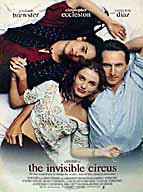 The Invisible Circus is a 2001 drama film, directed by Adam Brooks, and starring Cameron Diaz, Jordana Brewster and Christopher Eccleston. It is based on Jennifer Egan's best-selling novel.
It is a grow-up story with lots of pain. In particular, I like the scene when Phoebe took drug and she wondered around the street in Paris. She met her sister in day-dreaming and experienced the suffering they both shared. Phoebe tried to find her identify and sense of self through investigating the mystious death of her sister. Beautifully made! I am not quite sure why Phoebe falled in love with Wolfe, but I like Chris Eccleston. He played such obssessed lover!




订阅:
博文 (Atom)