mprimising its idea. Maybe that is one of amazing thing about belief! http://po-river.spaces.live.com/default.aspx?wa=wsignin1.0
mprimising its idea. Maybe that is one of amazing thing about belief! "Literature and Citizenship" is part of the Havel at Columbia program sponsored by the Columbia University Arts Initiative.
Arthur Danto is Johnsonian Professor Emeritus Philosopy at Columbia University. Professor Danto has been with Columbia since 1951, a professor since 1966. He has been the recipient of many fellowships and grants including two Guggenheims, ACLS, and Fulbright. Professor Danto has served as Vice-President and President of the American Philosophical Association, as well as President of the American Society for Aesthetics. He is the author of numerous books, including Nietzsche as Philosopher, Mysticism and Morality, The Transfiguration of the Commonplace, Narration and Knowledge, Connections to the World: The Basic Concepts of Philosophy, and Encounters and Reflections: Art in the Historical Present, a collection of art criticism which won the National Book Critics Circle Prize for Criticism, 1990. His most recent book is Embodied Meanings: Critical Essays and Aesthetic Meditations. Art critic for The Nation, he has also published numerous articles in other journals. In addition, he is an editor of the Journal of Philosophy and consulting editor for various other publications.
Orhan Pamuk, the internationally acclaimed Turkish novelist and memoirist, won the 2006 Nobel Prize for Literature.
Mr. Pamuk is a Fellow with Columbia University’s Committee on Global Thought and will hold an appointment in Middle East and Asian Languages and Cultures and at the School of the Arts. His work has been translated into more than 40 languages and he has received numerous prestigious international prizes, including Le Prix Mediterranee etranger, the Prix Medicis, the Ricarda Huch Prize, and honorary membership in the American Academy of Arts and Letters. A native of Istanbul, Mr. Pamuk was also a visiting scholar at Columbia University from 1985 to 1988.
| Date: | Thursday, November 2nd, 7:30 p.m. |
| Location: | Miller Theater |
| Contact: | Members of the Press who wish to attend this event should contact Anne Burt at 212-854-7884 or ab2673@columbia.edu |
| Reservations: | Tickets are free but reservations are required: http://havel.columbia.edu/literature.html |
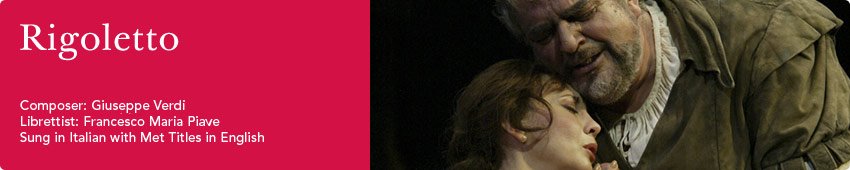
This season, Met Opera has a new production of Rigoletto and I went yesterday for its season premier. Met is famous for Enrico Caruso’s version of Rigoletto where he played the Duke of Mantua. In this season, Met introduces a new conductor Friedrich Haider and Juan Pons plays the Jester and Joseph Calleja has his debute as the Duke. As usual, the splendid night at Met always makes me nervous. However, I am luck enough to have two queers as my neighbors and their non-stopping talking made the intermissions bearable. Yesterday New Jersey court just announced same-sex couple would enjoy the same right as hetero-sex couple, and CNN took it as breaking news. This was certainly a side point.
I had some ideas about the storyline and the program notes gave detailed description of the production of the original opera. The story by Verdi was adopted from Victor Hugo’s play. As it was suggested, Verdi was more of a humanistic in nature while Hugo openly criticized the class structure. So Verdi’s adaptation changed the location and names of the play, but kept the major storyline and the core theme of the play—the curse upon the jester, who was cold and cruel outside but very compassionate inside.
According to wikipedia:
“ Rigoletto is an opera in three acts by Giuseppe Verdi. The Italian libretto was written by Francesco Maria Piave based on the play Le roi s'amuse by Victor Hugo. It was first performed at La Fenice in Venice on March 11, 1851. According to Opera America, Rigoletto is now North America's ninth most performed opera.”
A hit from start, Rigoletto was a tragedy full of tension. The double role of Rigoletto as a loving father and as a “fool” in the court gradually leads to his ruins. The Duke is portrayed as a womanizer who never takes women or love seriously. However, in the very process of pursuing Gilda, Rigoletto’s beautiful daughter, he finds his real compassion. Once he finds Gilda is abducted from Rigoletto’s house, he regrets he lose the only chance in his life that might have convert him into a honest man for love. Ekaterina Siurina gave a wonderful performance as Gilda, the innocent mind full of love. The structure of the play is simple, a story of a dishonored father who seeks just revenge but fails. However, Verdi and Piave (who wrote the libretto) refused to give their figures a simple identity but rather put them into dilemma—who were both victims and criminals. Rigoletto participated the Duke’s conspiracy of wooing other women and his own daughter was disgraced by the Duke. The Duke could have the chance to start a meaningful life because of his love for Gilda, however, he gave it up for his lust for her body. Gilda was guilty of blind love for the Duke and was suffered when she observed the Duke seduced Maddalena.
The trick of the play is not only the curse of Count Monterone whose daughter the Duke had dishonoured, but also the issue of identity. Gilda constantly asked her father about the real family name and history of her family, about her mother, and who her father really was. Rigoletto refused to answer and could not answer. He was suffering because of his fate as a humpback and a ruthless entertainer in Duke’s court. He was a man without name. The Duke who disguised himself before Gilda was also a man without real identity. He flirted and chased the skirts without knowing his own purpose. His love was shallow and superficial because his love was without a cause.
In the end of the play, Gilda decided to sacrificed herself for the life of the Duke, her lover. Rigoletto could not bear the pain of losing his daughter and lamented “the curse!” by her body. I can not help thinking about another movie, Immortality, directed by Po-Chih Leong. In the film, Jude Law played a ruthless vampire who took women’s love and life. He falled in love with Anna and he believed her perfect love for him would save him from the fate of vampire. The most touching scene for me was the morning after they get up, Steven (jude law) started a portrait for Anne with one hand and wrote a love poetry for her with other hand. Nevertheless, when the moment of truth came, Steven decided to kill Anne to save his own life. Anne refused to sacrifice herself for his sake and she tried to kill herself rather than being killed by Steven. Steven gave it up in the end and died in his own chamber. Before he died, he finally found peace in his mind and he did not have to worry about how to survive anymore. In his last breathe, he found the pleasure of letting go.
Gilda and Anne make different choice and the men they loved are evil. Maybe it is because the time is changed and our values change as well. Will you choose to play Gilda or Anne when you meet your evil man?
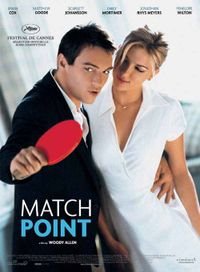
Wikipedia introduction about Match Point (2005, Woody Allan)
"The story is a fable about the role that luck plays in determining everyone's destiny. As protagonist Chris Wilton notes in an opening voice-over: The man who said "I'd rather be lucky than good" saw deeply into life. People are afraid to face how great a part of life is dependent on luck. It's scary to think so much is out of one's control. There are moments in a match when the ball hits the top of the net and for a split second it can either go forward or fall back. With a little luck it goes forward and you win. Or maybe it doesn't and you lose.
Structural and thematic similarities exist between the movie and two novels, Dreiser's An American Tragedy and Dostoevsky's Crime and Punishment. The movie also bears notable similarities in plot and theme to a previous movie of Allen's, Crimes and Misdemeanors. Perhaps the most influence stems from the 1964 Truffaut film The Soft Skin, in which a married man also has an affair that ends up in shotgun related murder.
The film's plot mirrors the novel An American Tragedy and the film A Place in the Sun, which also involve a poor man who, through the possibility of marriage to a wealthy woman, resorts to murdering a poor pregnant girlfriend in order to preserve his chances at a new life of wealth and privilege.
Opera connoisseurs have noted that the arias and opera extracts make an ironic commentary on the actions of the characters and sometimes foreshadow developments in the movie's narrative. The Caruso arias are intercut with extracts from contemporary performances which the characters attend over the course of the film. There are scenes at the Royal Opera House and elsewhere performed by opera singers, accompanied by a piano and not, as is usual, by an orchestra. Arias and extracts include work by Verdi (in particular Otello and Rigoletto), Donizetti's L'elisir d'amore, Bizet's Les pêcheurs de perles, Carlos Gomes' Salvatore Rosa and Gioachino Rossini's Guillaume Tell. "
If I only allow to use three words to describe this film, they will be: luck, lust and lost. It is a typical Woody Allan film, although it immediately reminds me about Montgomery Clift's A Place in the Sun (1955). I love Montgomery Clift's performance in that classic tragedy of social climber: he played a role tortured by ambition and tried to find aim of his life. Clift himself is a tragic figure in his off-screen life and his life had been described as a life-long pursuing of suicide. The darkside of his mind made him a perfect actor. In comparision, Jonathan Rhys-Meyers is a different type of actor. He wins his fame as independent film actor early in his life and his unforgettable role in Velvet Goldmine (1998) makes him a symble of fatal pop star. He also acts in some not decent films, such as Mission Impossible III. He is not afraid to show his sensitivity and vulnerable in moives, but his weakness makes him a more convincing character.
Match Point resembles the Closer in some respect. In both films, individuals try to find relationship which could satisfy both their body and mind and fail both ways. In Closer, Jude Law played this sick writer who could have win his true love but took a shortcut and ruined the whole thing. In Match Point, Chris (by Jonathan Rhys-Meyers) would have the option of not marrying Cholye and choose Noah, but he could not afford to lose the quality of life his marriage to Cholye conveyed. What differs in the two films is that in Closer, the film investigates the minds of males and females in the relationship; but in Match Point, we only observe Chris's mind. On the surface, the film emphasizes the importance of luck in individual's life; but the underlying theme is the unavoidable lust which pushes people ahead.
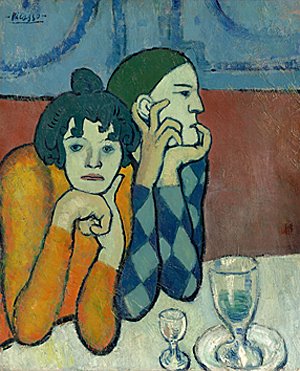
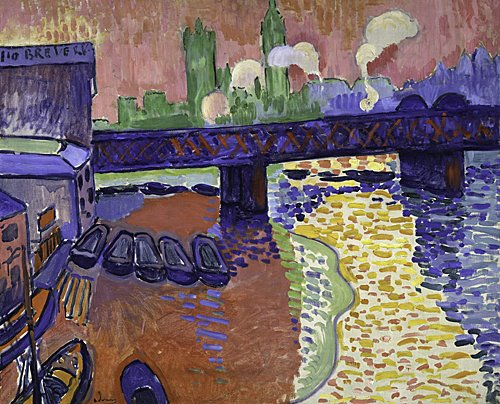
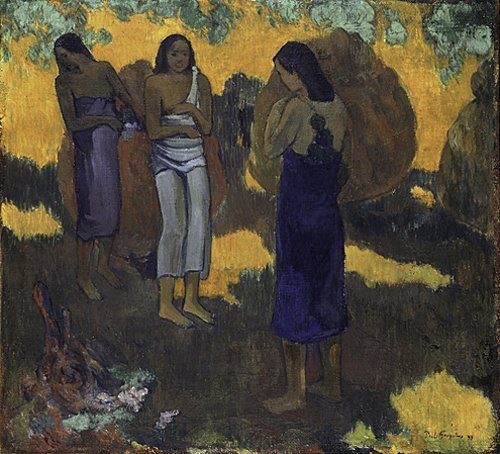
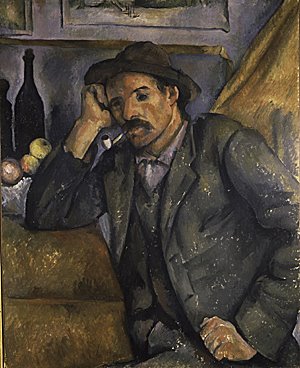
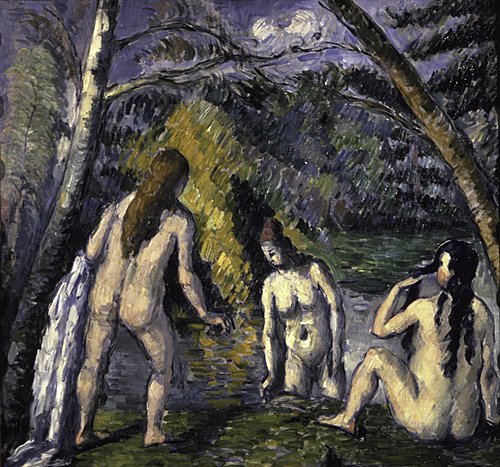
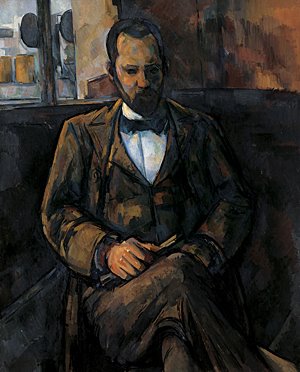
The exhibition features works by Bonnard, Cézanne, Degas, Derain, Gauguin, Van Gogh, Maillol, Matisse, Picasso, Redon, Renoir, Rouault, Rousseau, Vlaminck, Vuillard, and others. Highlights include five paintings from Vollard's landmark 1895 Cézanne exhibition; a never-before-reassembled triptych from his 1896–97 Van Gogh retrospective; the masterpiece Where Do We Come From? What Are We? Where Are We Going? from Vollard’s 1898 Gauguin exhibition; paintings from Picasso's first French exhibition (1901) and Matisse's first solo exhibition (1904); and three pictures from Derain's London series, painted in 1906–07 at Vollard's suggestion. The exhibition also includes numerous portraits of Vollard by leading artists, among them Cézanne, Bonnard, Renoir, and Picasso. Whether it was commissioned, exhibited, or owned by him, each of these works at one time passed through Vollard's hands."
The exhibition introduces each artist and their relationship with Vollard in a separate room, so you start with Cézanne, Van Gogh, and then Matisse, Renoir, and Picasso. There even a room for Vollard's portraits by different artists he sponsored . Picasso said Vollard had more portraits painted than the most beautiful woman in the world. Vollard had an exceptional taste for new art and the vision to take on new artists, even when he was in his early 20s. He opened his gallery at 27 and sponsored the most important exhibitions for Cézanne right away. He is not a collector, so the exhibition is not from his own collection (even though it is a large collection); the art works are organized the way as they were in the original exhibtions in late 19 ceuntry and early 20 ceuntry. Vollard is really a charactor and his best friend is Renoir at the time. There is a very short documentary of old Renoir and Vollard at the master's studio. Instead of working as a art critic or theorist to shape the world vision about new art, Vollard achieved that by commission works from artists, put them on his payroll, and sell their works on their behalf. He discovered new artists and reserve their works. When he died in 1939, his belongs might outbid any avant-gard gallery at that time. Due to the difficulty to resolve the cases around his will and the approaching war, his collections were kept in several countries including France, Canada, and U.S. and others. It was amazing to see them come back again in one exhibition. Other extraordinary achievement of Vollard is that he was highly interested in making prints and books for new artists, so many of the European artists were able to be known outside Europe. After WWI, he turned his interested into writing about his work, his relationship with artists, and the art history he was part of it. By all means, he was the power engine of the art world then. Having no legal child of himself, he left the world with his vision, his passion for art, and his unique talent in making the new art accessible to ordinary people.